Spending Well · 3 min read
The Truck That Owned Me
I bought it on a Tuesday.
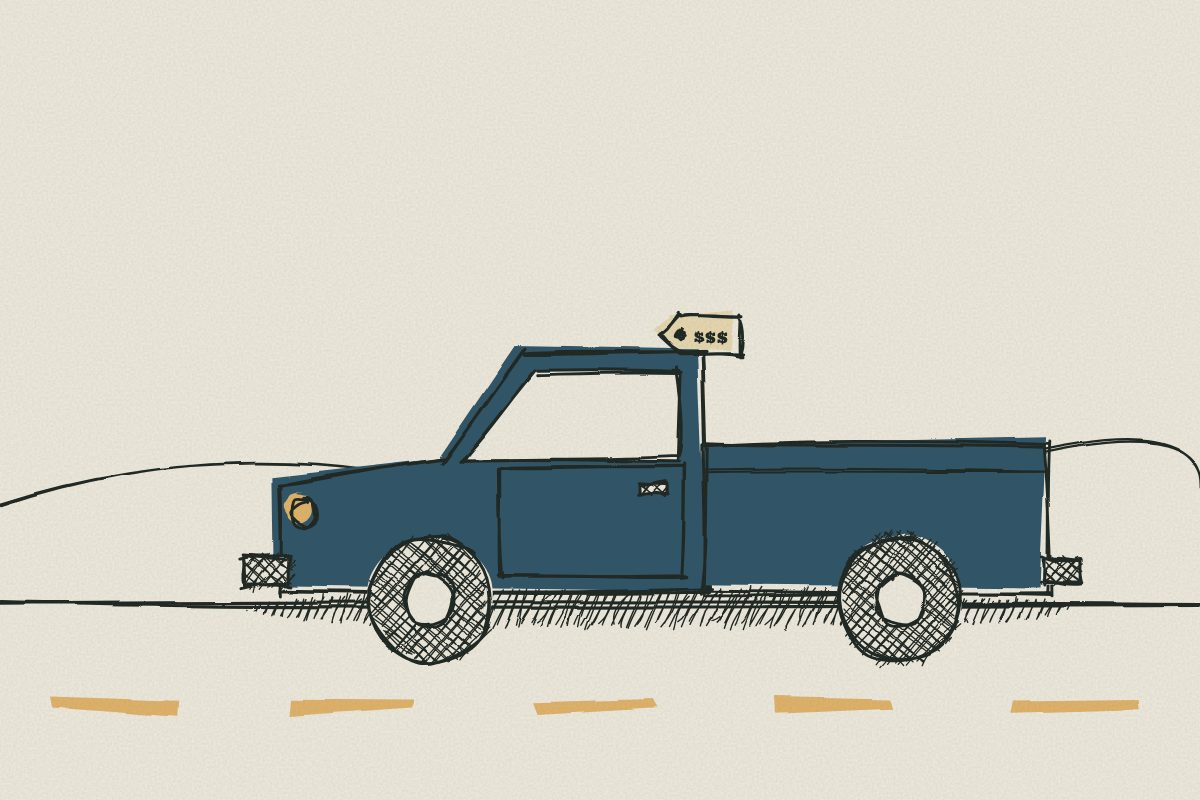
Nobody buys a truck on a Tuesday unless something’s a little off, and something was. My studio had just finished its best year. Four years earlier I’d started it at the kitchen table after getting laid off, and that spring we’d delivered a restored movie palace that made a city council member cry at the ribbon cutting. I had a check in my pocket and a feeling in my chest, and the two of them went car shopping together.
My old truck was nine years old. It had a crack across the windshield and a dent in the tailgate, courtesy of a job site dumpster, shaped almost exactly like Florida. It ran perfect.
The new one was black and quiet, with leather the color of good bourbon and a screen in the dash bigger than my first television. The salesman could tell from across the lot that I’d already decided. He didn’t need to sell me anything. I closed myself. Seventy-two months, because the payment looked better spread out that way, which is the most dangerous reason there is to sign anything.
I drove it home the long way, so people could see. I still don’t know who I thought was watching.
June walked out to the driveway, looked at the truck, and looked at me.
“It’s really nice,” she said.
Anyone who’s been married longer than a year knows what that means. It means, I see what you did, and we’ll talk about it when you’re ready.
I wasn’t ready for about eight months.
It wasn’t that we couldn’t afford it. We could. That was the trap. The payment cleared every month and nobody went without. But the insurance doubled, and the tires cost what a used car used to, and I wouldn’t haul anything dusty in it, so I kept the old truck too. I was paying to own two trucks so I could avoid using the nice one. I had built a small, elegant machine for losing money and parked it in my own driveway.
And then something happened I hadn’t expected. I started looking at work differently. Someone would call about a small job, a little bungalow porch, a storefront with good bones and no budget, the kind of work I loved, and I’d hear myself thinking about the payment before I thought about the building. The truck had moved into my head and started making decisions.
A payment doesn’t just take your money. It takes a vote.
One evening my daughter Casey, who was four, climbed into the passenger seat while I sat in the driveway doing arithmetic on my phone. She looked all around the cab. She touched the screen. She poked the leather like it might poke back.
“I like the old truck better,” she said.
I asked her why.
“It has Florida on it,” she said, as if I were the slowest man alive.
I sold the new one that fall. Lost a chunk of money doing it, more than I’ll put in writing. Kept the old one with Florida on the tailgate. The month the payment stopped, I noticed I was breathing deeper, the way you do when you finally set something heavy down.
Nice things aren’t the problem. I own nice things now and I enjoy every one of them. The problem was I hadn’t bought a truck. I’d bought a feeling, on a six-year loan, and the feeling left in about a week.
So now anything big waits thirty days. Most of the time the wanting quietly leaves on its own. Sometimes it doesn’t. Then I buy the thing, and I don’t feel one bit bad about it. If something still matters to you in a month, it probably matters.
Wanting fades. Payments don’t.